
 Clinton, South Carolina, Thursday, March 28, 2019, 11:56 a.m.
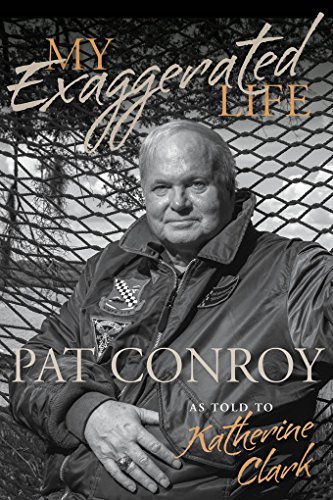
It took a long time to read My Exaggerated Life, the oral biography by Pat Conroy as told to Katherine Clark. It’s based on hundreds of conversations between the two. Conroy approved of it, though it wasn’t published until after he died of cancer on March 4, 2016.
It’s an easy read, but it appeared on my doorstep at a time when I was preoccupied with a new job, engaged in negotiations over a land sale, and dealing with some medical issues. The novel I’m writing stalled, too.
Getting the book done has had some good side-effects. I worked on the novel, my ninth, on Wednesday for the first time in months. I was reading three books at the same time. I found the time to take a weekend trip that replenished my cosmic stores. I came back from Asheville, North Carolina, ready to get back to things creative. I read the rest of My Exaggerated Life in about a week, and embarked on reading two other novels. I’d read one on my phone when I had some time to kill and the other on the Kindle when I was at home.
Expect more reviews soon.
It was Conroy’s life story that awakened me from creative slumber and the trip to Asheville and Knoxville, Tennessee, that reignited it.
I started reading Conroy early in high school, when The Water Is Wide inspired me at an idealistic time in my life. My first waves of disillusionment didn’t occur until college. I’ve read all his books except the first, The Boo, and I’m going to get around to it soon. The books to read have been piling up during the months of malaise and business.
His novels do not fully explain Conroy. It takes this bio to understand him.
Conroy had a knack that comes in handy for the novelist. He called it as he saw it and didn’t give a damn what others thought. His life was long enough for most of his detractors to come around. He found an uneasy peace with his abusive father, The Great Santini. His brutal honesty steamrolled some loved ones. Most of them loved him back by the time he died.
He could skewer with the best of them, and through what was spoken word, edited and transcribed by his friend and fellow author Clark, Conroy provides vivid detail of those he adored and those he abhorred. On no one is he as hard as himself.
It’s funny. It’s amusing. It’s heartbreaking, but the lingering impression is inspiration. I lucked into the perfect time to read it.
I never met Conroy, which I regret, because I could have. I know people who knew him. He was a South Carolinian. We both have had our share of dysfunction in life, but Conroy’s was an inexhaustible supply. He never ran out of his life’s bottomless pool of material.

I show up in all my novels, but I never wanted to write the same story over and over, with names changed to protect the guilty. At the end of six novels – and two short ones that were related – I had written all about Riley Mansfield, Reese Knighton, Chance Benford, Denny Frawley, Hal Kinley, Ennis Middlebrooks and Harry Byerly, Barrie Jarman, Mickey Statler, and others that I cared to. All my novels have flawed grown-ups and rebellious kids. I loved creating them but knew when it was time to say so long.
While I have been deeply influenced by John Steinbeck and Larry McMurtry, more of my characters have been inspired by Conroy. Mine are more likely to smoke pot. His are more likely to commit suicide. More are murdered in mine. More are estranged in his.
That plus Conroy was infinitely more successful. One cannot but help to ask “what price glory?” where Conroy was concerned.
If you become a patron of mine, you’re supporting writing like this as well as my mostly NASCAR blogs at montedutton.com. If you’ve got a few bucks a month to spare, click here.
Another way I cobble out a living is with my books, a wide variety of which is available for sale here.
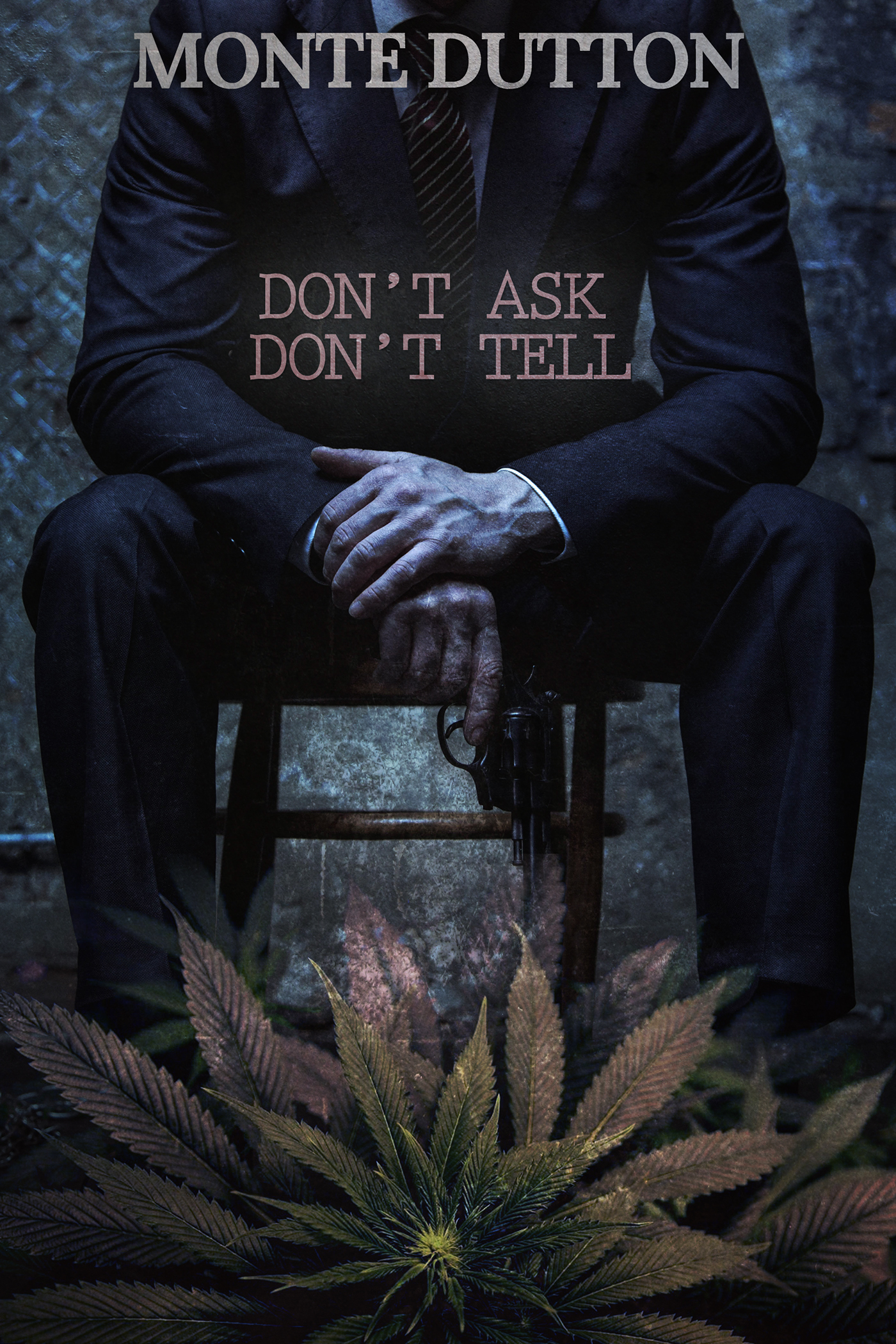
The new novel, my eighth, is called Don’t Ask, Don’t Tell.
Lightning in a Bottle is now available in an audio version, narrated by Jay Harper.
 Nightrider's Lament